Hamilton County Generator Permit Guide
Every whole-house generator in Hamilton County needs a permit. It comes from your city or the county, never the state, and it always covers the electrical work plus a code-compliant gas hookup. Everything else changes from town to town: the fee, the setbacks, the noise limits, even whether your contractor has to register. This guide lays out what each jurisdiction requires, and the placement rules that hold everywhere.
Last updated: September 2026
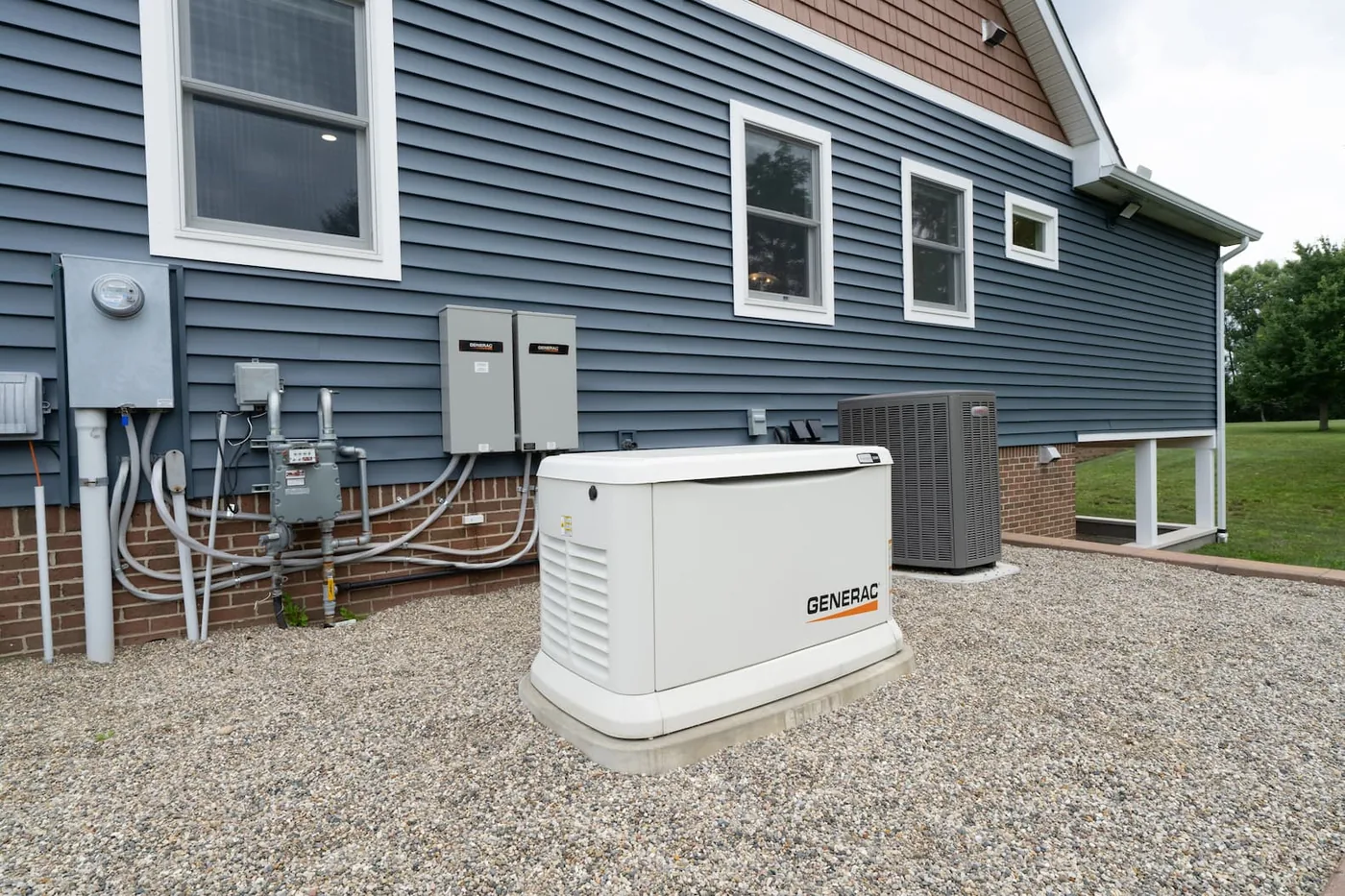
The short answer
A standby generator is electrical work and gas work, so it gets permitted and inspected. Skipping that is not worth it: an unpermitted install tends to resurface when you sell the house. In Indiana the permit is always local. The state does not permit one- and two-family homes, so the authority is your city, or Hamilton County if you live outside the towns.
One quirk catches people off guard: Indiana has no statewide electrician license. Every city and county sets its own rules, so who can pull the electrical permit, and whether your contractor has to register, changes the moment you cross from Fishers into Noblesville or Carmel. On the jobs we do, we handle all of it. We pull the permit, file the Indiana 811 locate before we dig, and see the inspection through.
Do you even need a permit? Yes, and it is local
Indiana exempts single-family homes from the state design release, so there is no state permit and no state inspector for a home generator. That does not mean no permit. It means your town or the county issues it, under the Indiana electrical, fuel-gas, and residential codes. The new gas line to the unit is its own permitted, inspected job in most places.
The tables below are the fast way to see what your town wants. Everything here is current as of September 2026. Fees and ordinances change, so confirm with your jurisdiction before you file.
Find your town
Pick your jurisdiction to see its permit, fee, contractor rule, noise limit, and official permit page in one place. The full comparison tables are just below.
- Permit
- Electrical + gas (fuel-line) permits
- Typical fee
- ~$75 per trade permit (confirm)
- Contractor
- Must register with the town (DIY homeowners exempt)
- Noise
- 80 dB(A) at 50 ft; exempt during an outage
- Self-test
- Daytime only: 7am-10pm (May 15-Sep 15), 7am-9pm (Sep 16-May 14)
- Placement
- Screened, not in a front yard; out of easements
- Permit
- Electrical; gas under a mechanical/plumbing permit
- Typical fee
- $75 upgrade / $150 new service
- Contractor
- Not required to register
- Noise
- 55 day / 45 night dB(A) at the line (70 dB nuisance cap)
- Self-test
- Daytime
- Placement
- Side or rear yard; district setback applies
- Permit
- Named "Generator" electrical permit
- Typical fee
- $100
- Contractor
- Must register ($150/yr builder registration)
- Noise
- 55 dB(A) 8am-10pm, 50 dB(A) overnight at 50 ft; 70 dB hard cap
- Self-test
- Daytime only, no test exemption
- Placement
- Side or rear; screening enforced closely
- Permit
- Under a building permit (confirm type)
- Typical fee
- Not published (confirm)
- Contractor
- Not published (confirm)
- Noise
- Not "clearly audible" at 40 ft, or 90 dB at 6 ft
- Self-test
- Daytime (no rule stated)
- Placement
- Side or rear yard; out of easements
- Permit
- Dedicated Town Generator Permit
- Typical fee
- $175 residential
- Contractor
- Homeowner may supervise; gas by a licensed plumber
- Noise
- 90 dB limit
- Self-test
- Daytime
- Placement
- Local rule: 5 ft from windows, doors, and intakes
- Permit
- Electrical permit (no separate pad permit)
- Typical fee
- ~$75 + ~$100 per inspection
- Contractor
- Homeowner may apply
- Noise
- Effectively unrestricted (75 dB(A) measured a half-mile away)
- Self-test
- No practical limit
- Placement
- Manufacturer clearances + district setback
- Permit
- Each town issues its own; call the town first
- Typical fee
- Varies (confirm)
- Contractor
- Varies by town
- Noise
- Varies; confirm the local ordinance
- Self-test
- Daytime
- Placement
- Manufacturer clearances; confirm local setbacks
Permits & fees by Hamilton County jurisdiction
| Where you live | Permit you pull | Contractor must register with the town? | Typical permit fee | Where to apply |
|---|---|---|---|---|
| Fishers | Electrical + gas (fuel line) | Yes (DIY homeowners exempt) | ~$75 per trade permit (confirm) | fishersin.portal.opengov.com · (317) 595-3120 |
| Noblesville | Electrical; gas under a mechanical/plumbing permit | No | $75 upgrade / $150 new service | Tyler EnerGov portal · (317) 776-6325 |
| Carmel | Named "Generator" electrical permit | Yes ($150/yr builder reg.) | $100 | cw.carmel.in.gov/PublicAccess · (317) 571-2444 |
| Westfield | Under a building permit (confirm type) | Not published (confirm) | Not published (confirm) | civicgov4.com/in_westfield · (317) 804-3150 opt. 5 |
| Cicero (town) | Dedicated Town Generator Permit | Homeowner may supervise; gas by a licensed plumber | $175 residential | Cicero/Jackson Twp Plan Commission · (317) 984-5845 |
| Unincorporated county | Electrical permit (no separate pad permit) | Homeowner may apply | ~$75 + ~$100 per inspection | Hamilton County Plan Commission · (317) 776-8490 |
| Sheridan, Arcadia & Atlanta | Each town issues its own; call the town | Varies | Varies (confirm) | Sheridan (317) 758-5293 · Arcadia (317) 984-3512 · Atlanta (765) 292-2626 |
Current as of September 2026. Fees and rules change, so confirm with your jurisdiction before filing. We pull the permit on the installs we do.
Noise & placement by jurisdiction
| Where you live | Noise rule for the running unit | Weekly self-test timing | Placement notes |
|---|---|---|---|
| Fishers | 80 dB(A) at 50 ft; exempt during an outage | Daytime only: 7am-10pm (May 15-Sep 15), 7am-9pm (Sep 16-May 14) | Screened, not in a front yard; out of easements |
| Noblesville | 55 day / 45 night dB(A) at the line (70 dB nuisance cap) | Daytime | Side or rear yard; district setback applies |
| Carmel | 55 dB(A) 8am-10pm, 50 dB(A) overnight at 50 ft; 70 dB hard cap | Daytime (no test exemption) | Side or rear; screening enforced closely |
| Westfield | Not "clearly audible" at 40 ft, or 90 dB at 6 ft | Daytime (no rule stated) | Side or rear yard; out of easements |
| Cicero (town) | 90 dB limit | Daytime | Local rule: 5 ft from windows, doors, intakes |
| Unincorporated county | Effectively unrestricted (75 dB(A) measured a half-mile away) | No practical limit | Manufacturer clearances + district setback |
A standby unit runs about 60-70 dB(A) up close, so placement and your HOA usually matter more than the town’s decibel number.
Placement and clearances: the part that never changes
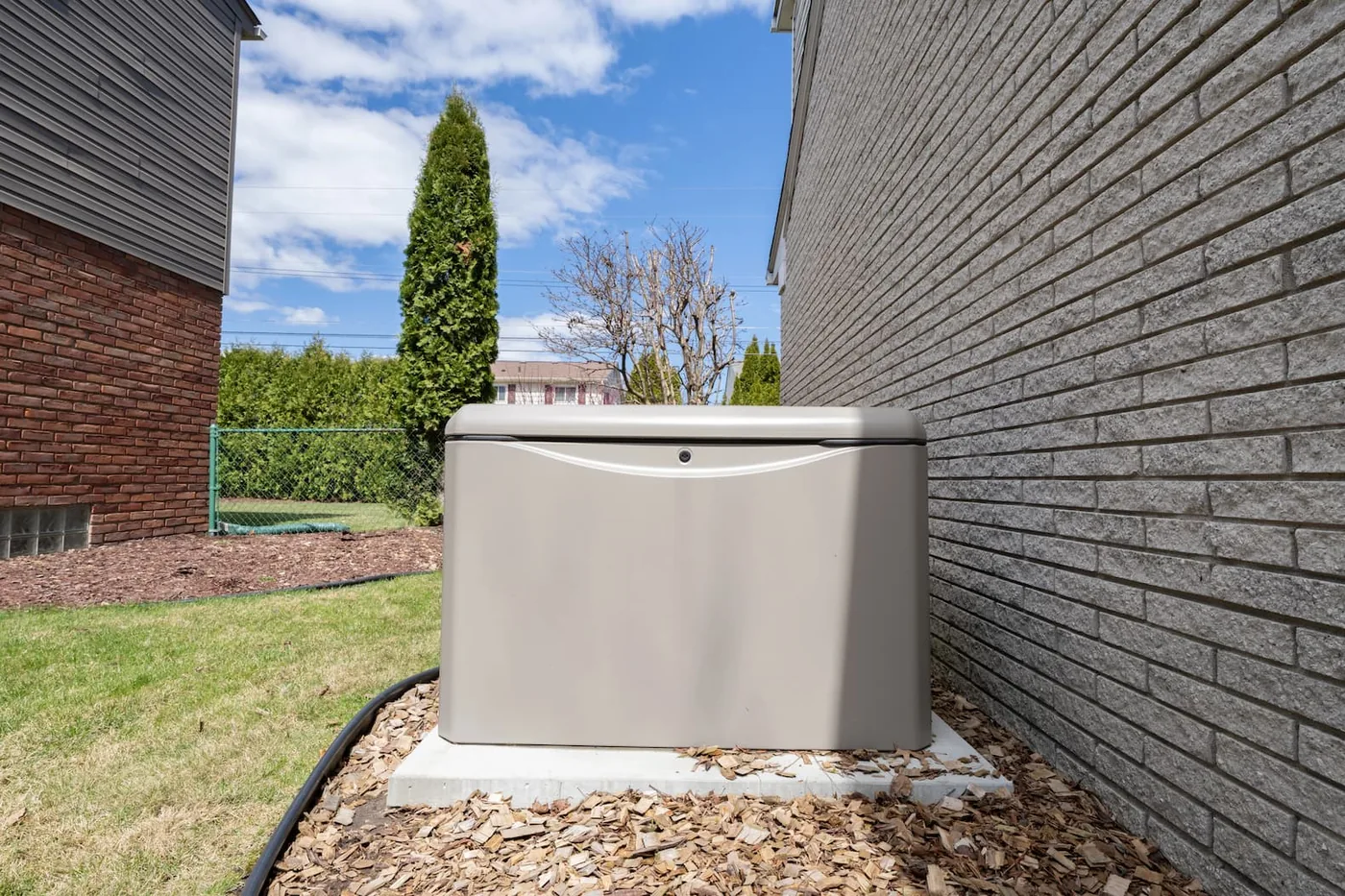
These distances come from the manufacturer and the fire and fuel-gas codes Indiana adopts statewide, not from any single town, so they apply everywhere in the county. For a typical air-cooled Generac unit, plan on about 18 inches from the back of the unit to the wall, 3 feet of clear space at the front and ends for service, 5 feet overhead, and no operable window, door, or fresh-air intake within 5 feet. Your model’s installation manual is the final word, and the exact figures shift with the size of the unit.
The gas side is code too. You need an accessible manual shutoff, a listed flexible connector, and a line sized for the generator’s full load on top of your existing appliances. That last point is why an undersized meter sometimes has to be upsized by the gas utility before the unit will run right. A few towns add their own rules on top: Cicero sets an explicit 5 feet from windows, doors, and intakes, and Fishers and Carmel add zoning setbacks and screening. In those, you meet both the code and the town.
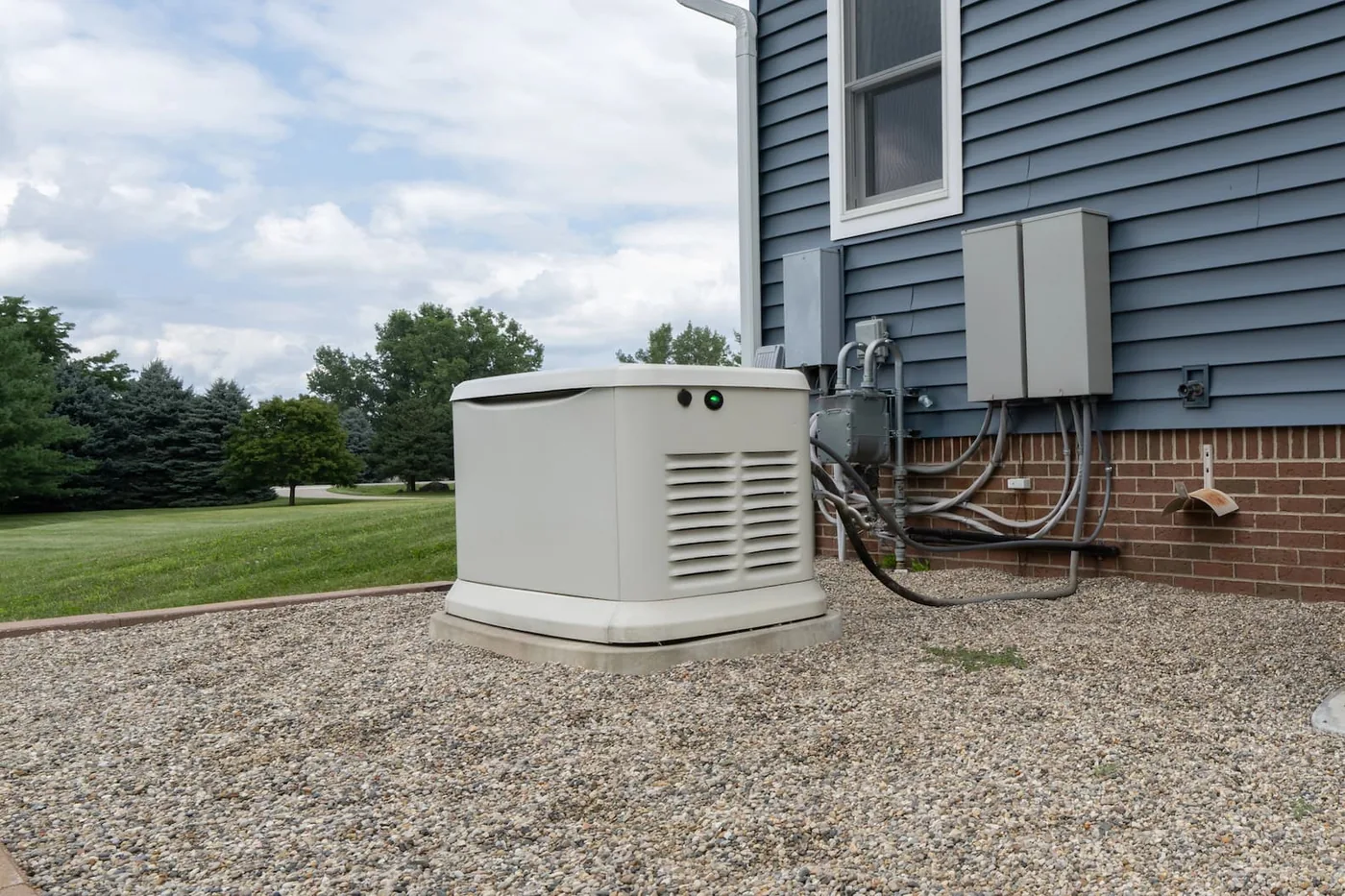
What the tie-in looks like
A standby install ties three things together at the wall: the gas line and regulator, the automatic transfer switch, and a service disconnect. Each one is permitted and inspected.
That is why the permit covers two trades, and why the gas load and the panel both get checked before anyone sets the pad.
The differences that trip homeowners up
Contractor registration is the big one. Fishers and Carmel require the installing contractor to register with the town. Noblesville explicitly does not, and Westfield publishes no requirement at all. Carmel and Cicero go further and issue a named "generator" permit, while Fishers and Noblesville file the same work under standard electrical and gas permits.
Noise is the other surprise. The unincorporated county is effectively unrestricted, since it measures its limit a half-mile from your property line. Carmel is the opposite: it gives the weekly self-test no exemption, so an overnight exercise cycle can technically break the 50 dB night limit. The fix is the same everywhere. Set the exerciser for a weekday daytime slot, and place the unit with a little thought.
Your HOA can be the real gatekeeper
In most Hamilton County subdivisions, the real gatekeeper is not the town. It is your HOA. Recorded covenants control exterior equipment, so you almost always need Architectural Review Committee approval in writing before you install, and the committee can dictate screening, location, and sometimes the model. Get that approval first. It is the step people skip most, and the one most likely to force a finished install to be moved.
One recent change works in your favor. A 2026 Indiana law bars an HOA from rejecting outdoor equipment solely because of its fuel source, so an association cannot ban a gas or propane generator just for being gas-powered. It can still regulate screening, placement, and noise. So what you are really managing is approval, not fuel type.
Your standby-generator permit checklist
The universal steps for a compliant install anywhere in Hamilton County. Your town’s specific permit, fee, and noise rule are in the tables above. Print this, then confirm the specifics with your jurisdiction.
Universal steps only. Fees, setbacks, and noise limits vary by town (see the tables above) and change over time. Always confirm the current details with your jurisdiction before filing.
Official permit page for each jurisdiction
Go straight to the source. Each Hamilton County jurisdiction’s official building/permit page:
- Fishers: Permits & Inspections (317) 595-3120
- Noblesville: Building & Inspections (317) 776-6325
- Carmel: Residential Permits (DOCS) (317) 571-2444
- Westfield: Apply for a Permit (317) 804-3150 opt. 5
- Cicero: Cicero/Jackson Twp Plan Commission (317) 984-5845
- Unincorporated Hamilton County: Plan Commission (317) 776-8490
- Sheridan: Planning & Development (317) 758-5293
- Arcadia: Building & Zoning (317) 984-3512
- Atlanta: Town Hall (765) 292-2626
Common questions
Yes. A standby generator needs an electrical permit, and the gas line is permitted work too. You pull it with your city, or with Hamilton County if you are outside the towns. The state does not permit one- or two-family homes. On the installs we do, we pull the permit and handle the inspection.
Most Hamilton County jurisdictions let a homeowner pull a permit for their own home. But the job is electrical work, gas work, and a code inspection. Most people hire a pro. Indiana has no statewide electrician license. Each town sets who may do and permit the work, so check your jurisdiction’s rule.
Plan on roughly 18 inches from the wall, 3 feet of clearance in front and at the ends, 5 feet overhead, and no operable window, door, or fresh-air intake within 5 feet. That comes from the manufacturer’s listing and code. Cicero adds an explicit 5-foot rule from openings. Always follow your unit’s installation manual.
Schedule the exercise cycle for daytime. Fishers sets explicit hours: roughly 7am to 10pm in summer, 7am to 9pm in winter. Carmel gives the weekly test no noise exemption at all, so an overnight test can break its 50 dB night limit. A weekday daytime slot keeps you clear everywhere.
Your recorded covenants control. You almost always need Architectural Review Committee approval before installing, covering screening and location. A 2026 Indiana law bars an HOA from rejecting a generator solely because it runs on gas or propane. They can still regulate how and where it goes. Get written approval first.
It varies by town. Figure roughly $75 in Noblesville and unincorporated Hamilton County, $100 in Carmel, and $175 in Cicero. Fishers and Westfield vary, so confirm the current fee with your town. Either way the permit is a small part of a full install, and on our jobs we handle it as part of the project.
Sizing, permit, gas, placement, and inspection are all part of the install. See our standby generator options and book an on-site load calc. We pull the permit with your Hamilton County jurisdiction for you.
Standby Generator InstallationThe placement clearances and the gas connection come from state-adopted code, identical in every Hamilton County town. Indiana adopts it through Title 675 of the Indiana Administrative Code.
Indiana Administrative Code, Title 675 (building & electrical codes)Compiled from each Hamilton County jurisdiction’s published permit pages and noise ordinances, plus the state codes Indiana adopts through Title 675 of the Indiana Administrative Code, current as of September 2026. Fees and rules change, so confirm with your jurisdiction before you file. Free to cite or link.
- Indiana Administrative Code, Title 675 (building, electrical & fuel-gas codes)
- Hamilton County Plan Commission — Permit Requirements
- Each town’s official permit page and noise ordinance (linked by jurisdiction above).
Meridian Generator & Electric. “Hamilton County Generator Permit Guide.” Updated September 2026. https://meridiangenerator.com/hamilton-county-generator-permit-guide/ Tell us about your home.
Send the basics and we'll set up a free on-site assessment, run the load calc, and come back with a transparent, fixed bid, no obligation.
- Free on-site assessment, no obligation
- A real person responds, usually same day
- Authorized Generac dealer · warranty-compliant
Thanks, we have got it.
We'll review your details and reach out to set up your free on-site assessment and load calculation. If you would rather talk now, call or text us at (463) 283-5939.